2026-02-09 14:00
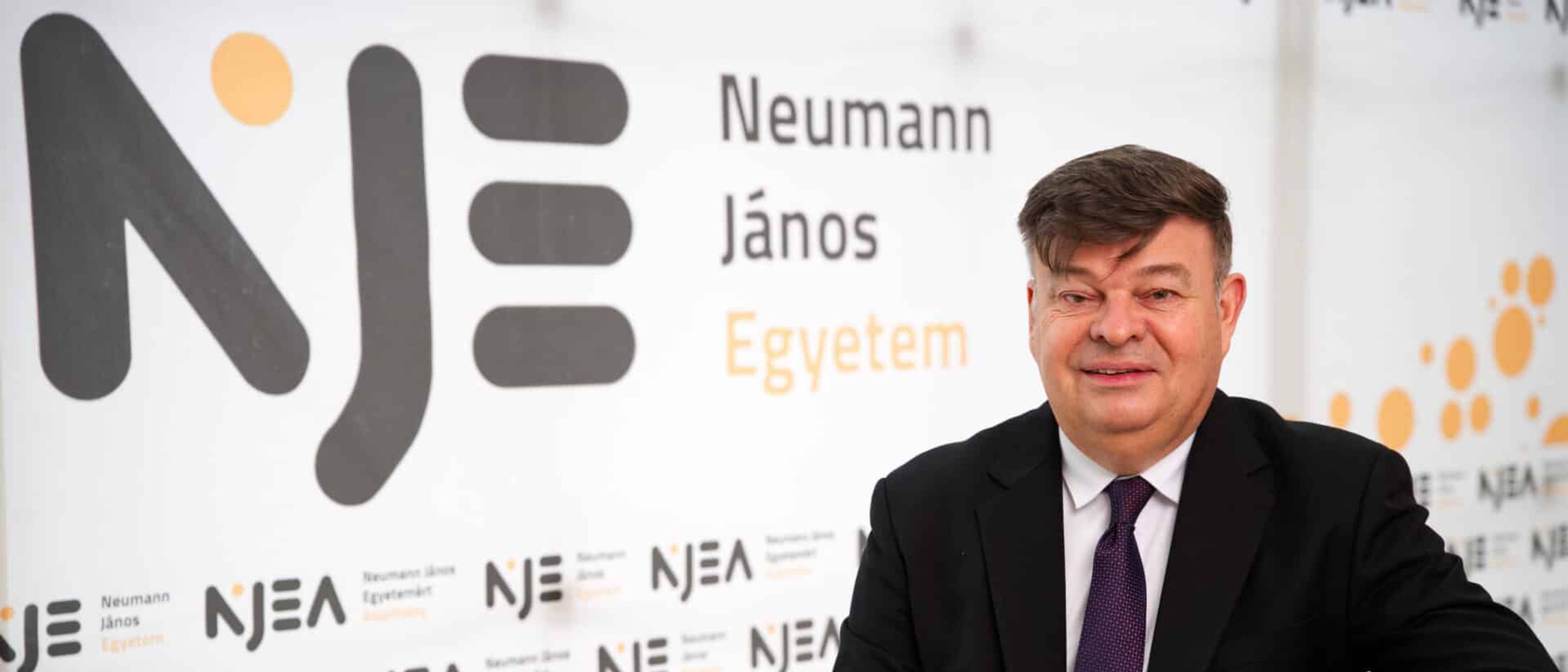
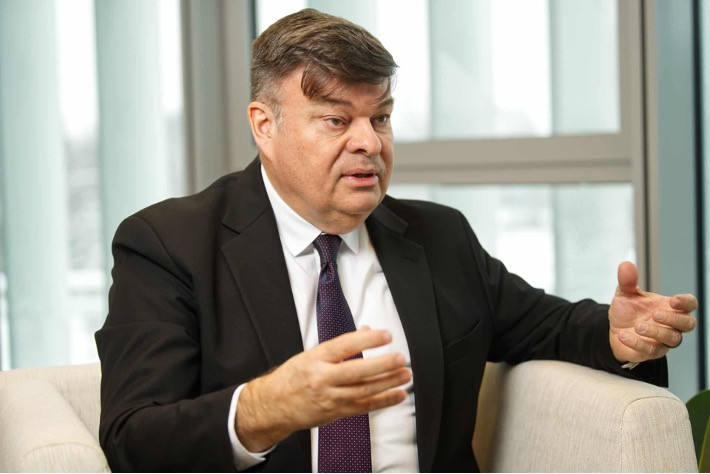
Two years ago, a promise of a change in approach emerged in a discussion about the future of John von Neumann University. We spoke with Zoltán Nagy, the newly appointed president and CEO, who came from a multinational corporate environment at the time, about market-oriented operations, strengthening industrial relations, building an innovation ecosystem, and opening internationally, mostly in the future tense. Two years later, the university president visited our editorial office again.
Can we say at the beginning of the conversation that this time we are not talking about plans, but about results?
One of the most important pieces of feedback for me is that the implementation of the plans did not stall even in the difficult economic environment; in fact, in certain areas, development really accelerated at that time. One of the most striking examples of this is dual training. While industrial players around the world have become more cautious, the circle of dual partners of John von Neumann University has continued to expand, and the number of companies cooperating in this way is now approaching one hundred. This is not just a statistic, but proof that the university has become a stable, reliable player in the economic arena, has a reflective impact on the labour market, and is already able to provide its students with a stable vision of the future and career opportunities during their education.
Huge progress has also been made in internationalization. The number of foreign students is approaching 500, while the university's international network of contacts has expanded significantly. Particularly strong Asian collaborations have been established in the form of research projects, publication partnerships, and exchange student programs. International presence is no longer a separate strategic element, but a natural part of everyday operations and a feature of the university's profile that has a significant impact on the institution's development opportunities.
This is a strategically important pillar of the university! We take it seriously because we are taken seriously in the international arena. The fact that universities in the Asia-Pacific Region will hold their annual conference in Kecskemét in 2026 is a unique sign of recognition in Hungary. Our city will host the 38th AUAP annual conference in May at John von Neumann University, where we expect more than 300 foreign experts.
Could internationalization have an impact on the everyday lives of Hungarian students and possibly university staff?
Opening up to the international arena is very important in terms of changing the horizons and perspectives of the Hungarian experts who make up the institution and the Hungarian students who study here. The Pannonia Program, which has become extremely popular in Hungary and at the University of Kecskemét in a short period of time, also plays an important role in this. Not only students, but also teachers and staff are taking advantage of the mobility opportunities, which is noticeably shaping the institution's mindset and professional culture. I can say that the Pannonia Program has unexpectedly and successfully filled the gap that Hungarian students are suffering from because of the European Union's flawed and unfair decision to block the Erasmus program.
In international relations, the way in which an institution draws attention to itself with innovations and scientific news plays a key role. What have you done to achieve this?
Perhaps the most striking change has been in the field of innovation. With the establishment of Neumann Technology and Knowledge Transfer Ltd., the University has built a tangible bridge to the market. We have registered twenty patents in the recent period, while our publication activity has also increased significantly. Knowledge transfer is no longer a side experiment, but a consciously built system, one of the main goals of which is to launch and support start-ups.
It is now clear that the University stands on three pillars! The main focus is on education, research, and innovation, and it should be emphasized that it is the interconnection and daily changing balance between these, as well as their mutual reflection, that should determine the pulse and functioning of the institution. These are not separate areas but rather functions that reinforce each other.
Thus, the previous training-focused collaborations have now been replaced by a consciously constructed three-level model: dual training forms the basis of industrial relations, on which deeper cooperation through technology and knowledge transfer is built, while at the third level, the university appears as an active market player, creating spin-offs and start-ups.
This is the newly created ecosystem of John von Neumann University!
To what extent can this new focus be traced back to the new model developed five years ago?
The change in approach is also evident in the way the organization operates. Developments based on digitalization have been launched, more transparent and efficient processes have been created, and the university has been particularly successful in attracting grant funding. We have introduced a corporate management system developed by us, thanks to which we have implemented a regular data-based, or as we call it, Data Driven University model management system, i.e., a performance and process overview system. In this approach, the primary goal of transparency is not increased employee control, but rather the creation of a system of information that allows us to change course quickly in governance if circumstances so require. It is important that we know our environment as well as possible, that we are aware of our opportunities and that we can immediately seize every resource, whether it be money or knowledge, in the strictest sense of the word. As a result of this approach, we have successfully applied for several grants from the National Research and Development Agency, and thanks to this support, major research and development projects are being implemented, further strengthening our innovative footing. It is worth noting that John von Neumann University now employs more than 400 people and, considering the number of students, has become an institution that keeps more than 5,000 people active every day.
In the face of market competition, what focus has remained in the original academic areas?
Academic developments are at the heart of every process. All our measures are taken in connection with the academic field and with a higher education perspective. Without this, our market activity cannot grow, so there are spectacular results here.
Last year, we announced the launch of electrical engineering training, and our portfolio has been enriched with several new master's programs that are closely linked to economic and technological needs. We have also entered areas that may seem unfamiliar but are nevertheless highly relevant, such as master programs in tourism and hospitality, environmental economics and sustainability, furthermore, training opportunities related to weapons design.
A doctoral school in organizational science, which is unprecedentedly successful in the Hungarian higher education with attracting a significant number of international students with Stipendium Hungaricum scholarships, is already in operation. It should be noted that, thanks to the emerging multidisciplinary technical doctoral school, John von Neumann University can now offer a complete academic career path from undergraduate to master's and doctoral degrees. Previously, this opportunity was exclusive to major universities of science such as the Budapest University of Technology and Economics or the University of Szeged. In summary, the expansion of academic offerings is not an end in itself or the result of some kind of higher education obligation, but rather a natural consequence of market-oriented operation.
How would you sum up these two successful years?
Today, there is no question that the world is curious about us, especially China and those global economic powerhouses that are considering investing in Europe, because a university has been built and is being built in Kecskemét that not only trains professionals, but also understands and wants to convey the culture of investment, the logic of thinking, and patterns of cooperation. With twice the number of students, double degree programs in the works, and international partnerships, this institution can no longer be ignored, and its absence would create a vacuum in which the region's industrial development would simply be unable to change direction.
In answer to the question, the most important difference compared to the initial situation is precisely what is difficult to quantify! The mindset. Two years ago, a change of direction began to take shape, and today this direction already determines decisions, developments, and day-to-day operations.
Of course, at this pace, not every step is flawless! Sometimes chips fall, dead ends have to be turned around, decisions have to be rethought, but this is not uncertainty! All this is a sign that the university is working, experimenting, and moving forward.
Considering the global economic and higher education environment, it is worth interpreting the criticism in this context and not disputing what has been achieved in the meantime. Neumann János University is no longer the institution it used to be it has become a university that is known abroad, has changed its model and approach, and of which the people of Kecskemét can be justifiably proud.
Source: Hírös Gazdaság Magazine