
2025-12-02 08:21
The John von Neumann University's GAMF Faculty of Engineering and Computer Science recently hosted the inaugural "Future of Logistics" conference. The event focused on critical subjects like industry trends, technological innovation, and understanding the unique characteristics of Generation Z.
Dr. Zoltán Valentinyi, a lecturer at John von Neumann University, told hiros.hu that since its launch in 2016, the logistics bachelor's program at the GAMF Faculty has become the country's leading logistics education program, enrolling approximately 200 new students annually across both full-time and correspondence courses—a size unmatched elsewhere in Hungary. Dr. Valentinyi highlighted ambitious expansion plans for JvNU, including introducing a master's program, launching an English-language bachelor's program (aimed at both Hungarian and international students), and eventually establishing a doctoral program. Reinforcing this growth, JvNU introduced two new specialized postgraduate programs this September: a logistics system specialist engineering course and, in cooperation with the Faculty of Economics, a logistics specialist economist program.
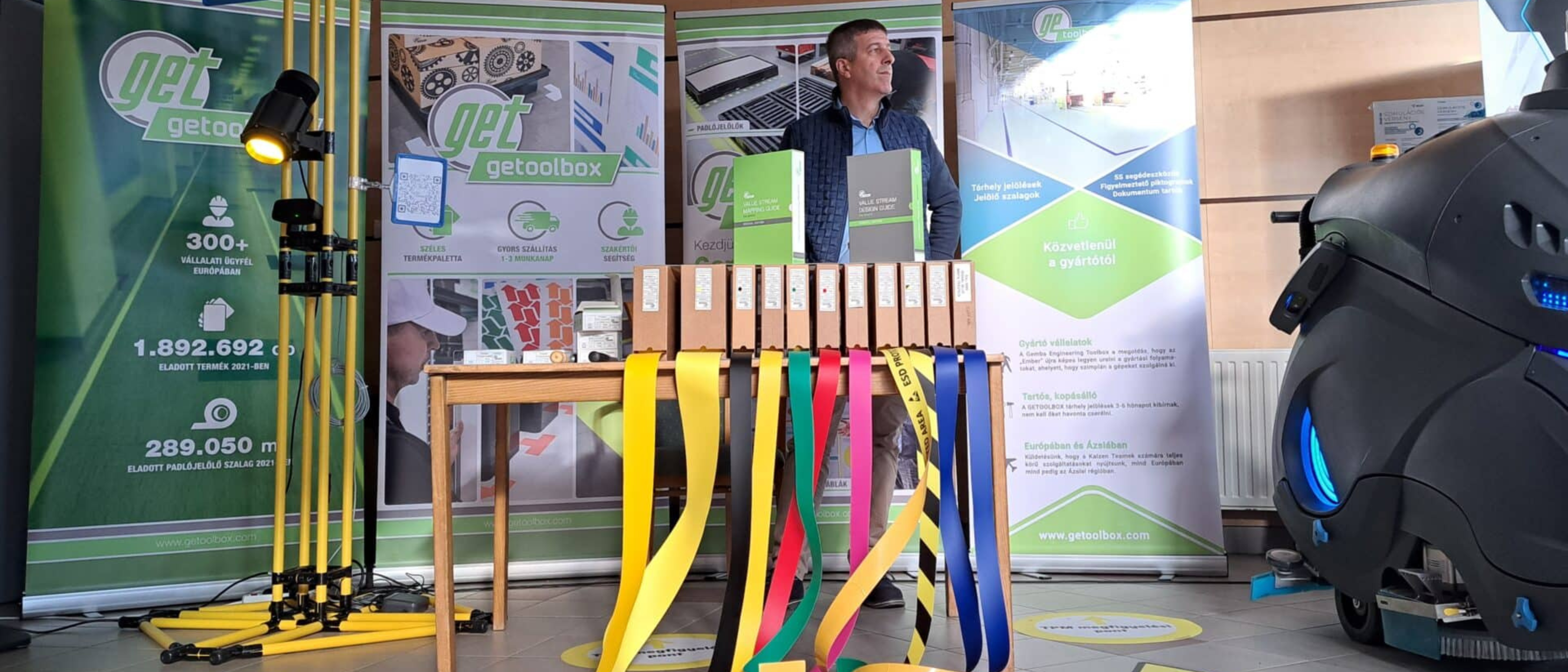
Establishing a tradition, the first-time conference saw nearly 100 registrations, while the accompanying exhibition featured technological novelties from almost 10 companies. In a fascinating display, the most advanced industrial robots paraded around a classic Ford Model T, a former industrial masterpiece, in the GAMF auditorium. This juxtaposition highlighted the industry's evolution. Cleaning robots and driverless forklifts—classified as Automated Guided Vehicles (AGVs)—performed their tasks courteously among the attendees, displaying unique, almost creature-like behavior that earned them names.
Following Dr. Valentinyi's welcoming address, Ferenc Lajkó, President of the Logistics Section of the Hungarian Economic Association (MKT), shared his opening thoughts. Mr. Lajkó noted that the HEA's Logistics Section had formulated a new strategy this spring centered on three main goals: professional knowledge sharing (exemplified by the conference), promoting the logistics profession to clients and young people, and researching the future of logistics. He emphasized the dramatic transformation of consumer habits and the consequent change in logistics demands.
"Logistics is a secondary value-creating industry. Our duty is to establish the physical connection between economic actors—the producer and the consumer. They set the pace, and we respond. If consumer habits shift, we must adapt," Lajkó explained. He cited e-commerce as a prime example: "Today, many millions of packages arrive at Ferenc Liszt International Airport (Ferihegy) due to e-commerce. Ten years ago, this business was insignificant. Logistics had to prepare for this: massive investments were made at Ferihegy, infrastructure was expanded, and new service providers and services emerged."
The wide-ranging discussions included industry trends, the "impatient consumers of the instant world," and Generation Z (with a dedicated roundtable featuring university students). Technological topics covered warehouse automation, robotization, and digital transport solutions. Jointly organized by JvNU's GAMF Faculty of Engineering and Computer Science, the Logistics Section of the Hungarian Economic Association (MKT), and the Club of Logistics Leaders of Large Companies, the conference successfully achieved its primary objective: fostering dialogue and experience-sharing between industry professionals and university students.
Source: www.hiros.hu